Article cover: Natural Ventilation or a Heat Recovery Unit? What to Choose for a Home in Moldova

Natural Ventilation or a Heat Recovery Unit? What to Choose for a Home in Moldova

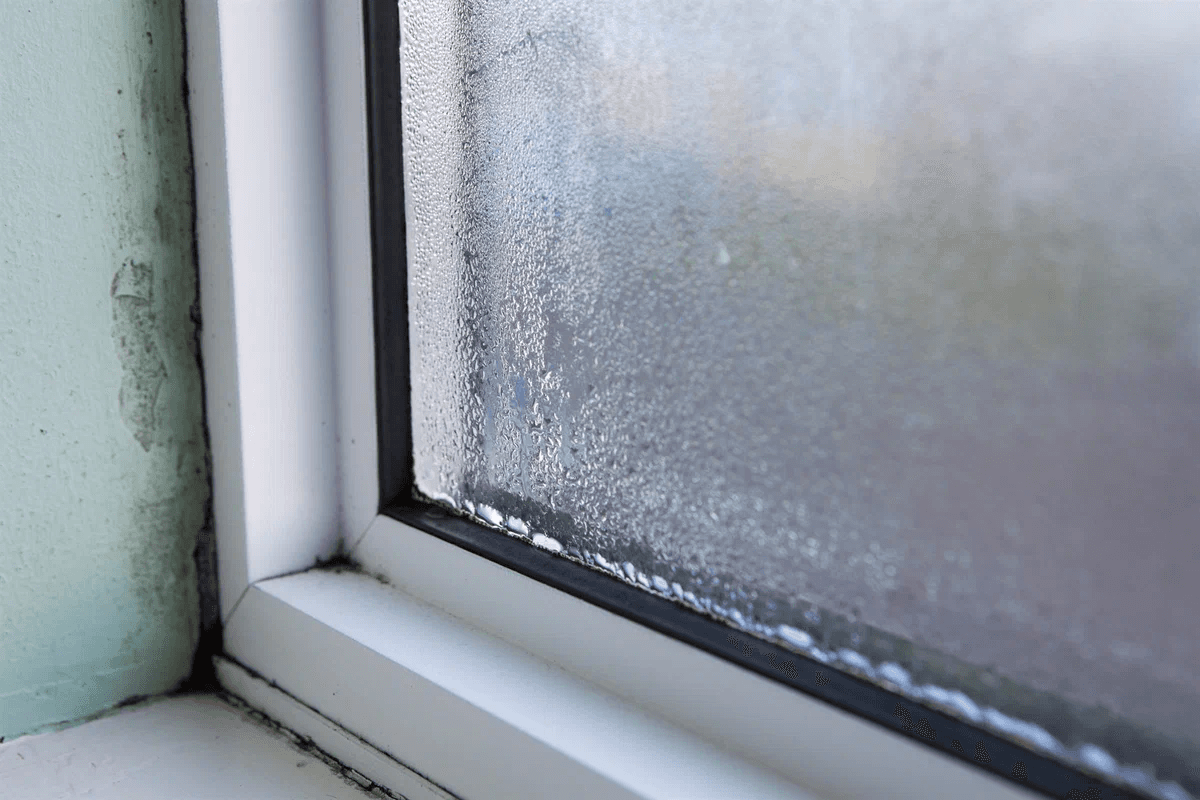
If your windows fog up in winter, the room feels damp, or you want to air the bedroom more often with the windows closed, start with how air will enter and leave the room. For bedrooms, living rooms, kitchens, hallways and attic spaces with outdoor access, we at VentPrime usually recommend natural ventilation. We install two valves per room: one brings in fresh air, the other removes humid air from the room.

Comparison of natural ventilation and a room heat recovery unit

What we're comparingVentPrime natural ventilationRoom heat recovery unit
Equipment per roomTwo valves on one exterior wall. One supplies air, the other extracts it.A single room unit handling both supply and extract.
Fresh air intake in winterWe place the intake valve beside the radiator or above it if there is enough space under the windowsill. Cold air mixes with the warm flow from the radiator and is heated by your own heating system.A single recuperator with electric mini-heating costs roughly 11,000–15,500 lei based on verified models. The unit is usually mounted high on the wall, away from the radiator. In one verified example, the mini-heater can raise the supply air temperature by about 3–5 °C in night mode.
Micro-ventilation and air movementWith the valves open and natural draft present, fresh air enters through one valve while humid air leaves through the other at the same time. This creates continuous micro-ventilation in the room. The valves can be slightly opened for gentle intake without a directed stream from a fan.With a room recuperator, a fan draws humid room air out and supplies filtered fresh air through the same unit. Air exchange runs continuously without opening a window, and the supply air is filtered before it enters the room.
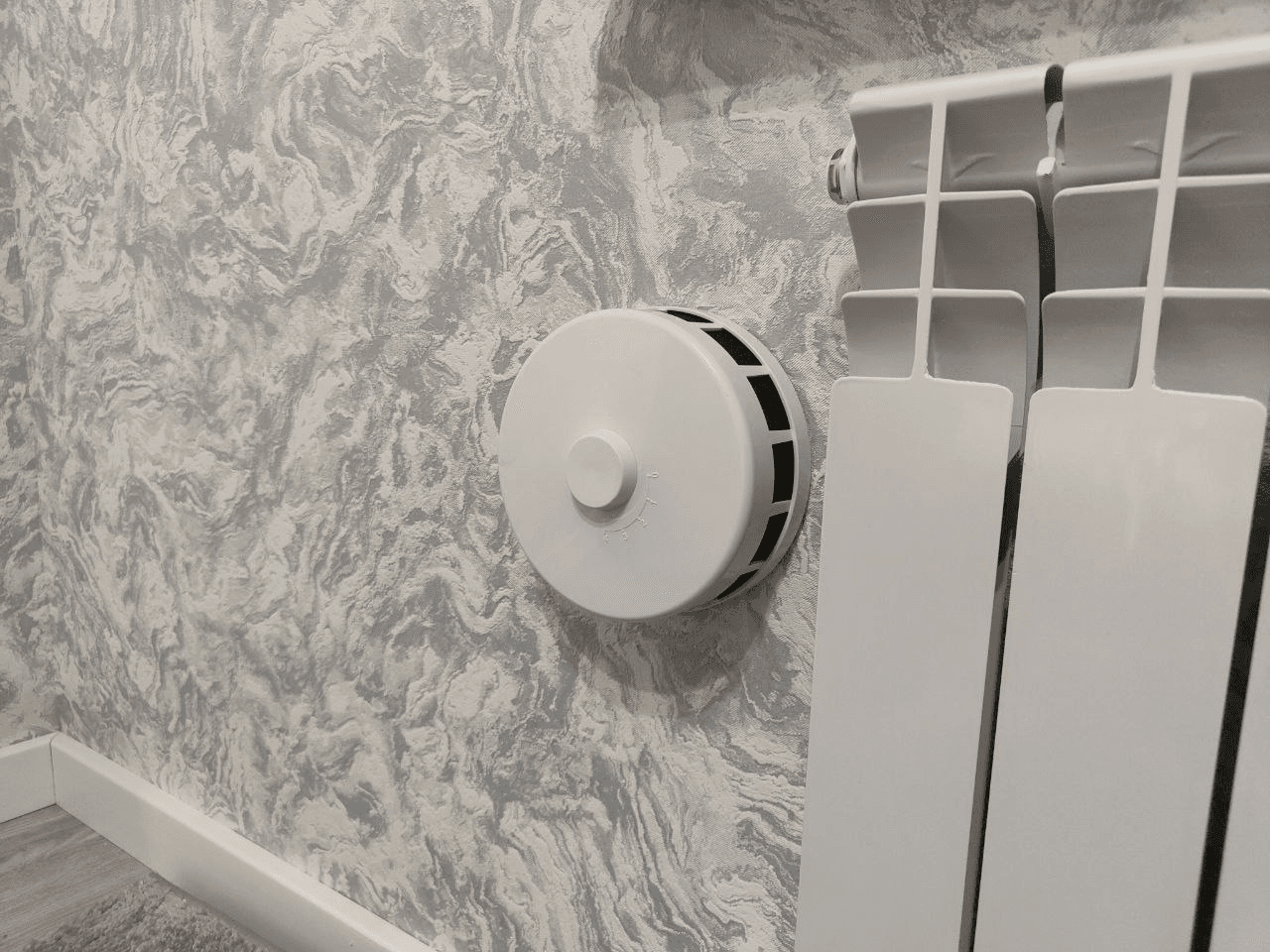
Adjustment and closingThe valve has five positions: 0 — closed, 1–3 — intermediate positions, 4 — fully open.After the fan is switched off, air may continue to pass through the open grille. Whether and how it can be closed depends on the model.
Night-time operationThe valves can be left open overnight. They have no fan and no motor noise.A running fan creates noise that is more noticeable in the quiet of a bedroom. If the unit is switched off, forced ventilation stops.
Street noiseSound-absorbing material is installed along the entire length inside the tube, helping reduce noise from the street.How much street noise passes through the unit depends on the design of the channel, the grille and the sound insulation of the specific model.
Installation hole sizeTwo Ø110 mm holes per room. We install a 100 mm diameter tube in each.Some wall-mounted models require a single hole of at least Ø162 mm. The exact diameter depends on the model.
Installation in a thin wall and appearanceWe install the valves even in a wall just 10 cm thick. The tube is matched to the wall thickness, so it is completely hidden inside. Only the valve cover protrudes on the room side.For verified standard models, the minimum module length is 44–49 cm, and 35 cm for the compact version. With a 20 cm wall, the standard module is 24–29 cm longer than the wall. Depending on the model and installation method, part of the housing may protrude into the room or outside the façade.
MaintenanceThe filter can be removed, cleaned, washed or replaced. Replacing the inner valve cover costs 300 lei.The unit requires maintenance. If it breaks down, the fan, electronics or other parts may need repair or replacement.
Cost per roomAround 3,000 lei for two valves with standard installation. When two valves are installed, VentPrime gives a 50% discount on ozone treatment of that room to treat mould and bacteria.For comparison: 11,000–15,500 lei for one unit (installation not included). The exact price depends on the model.

Why we install the intake valve next to the radiator

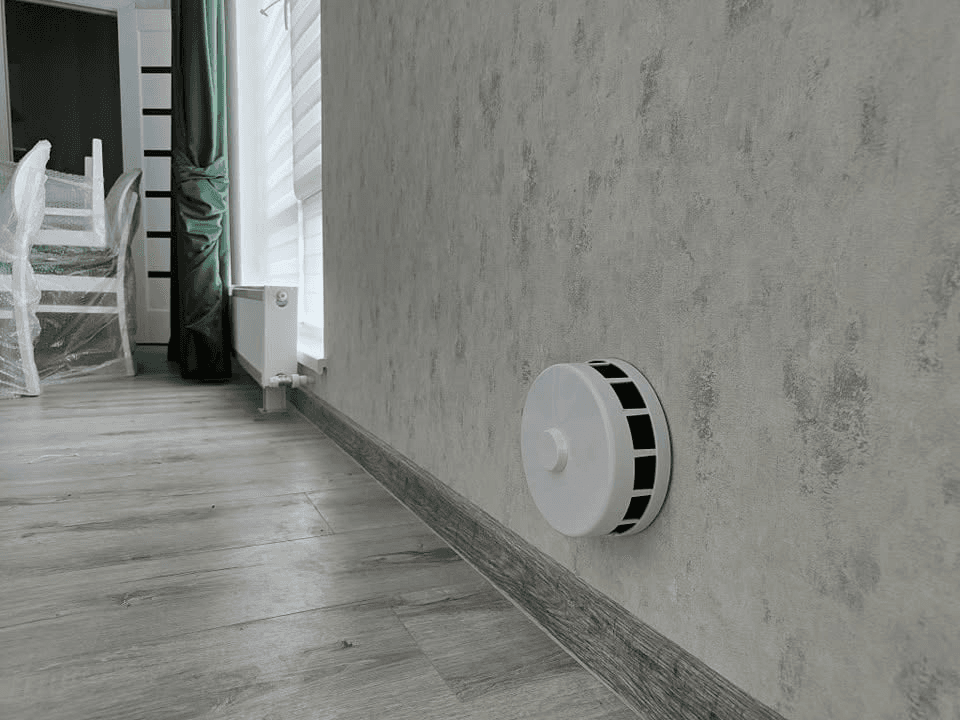
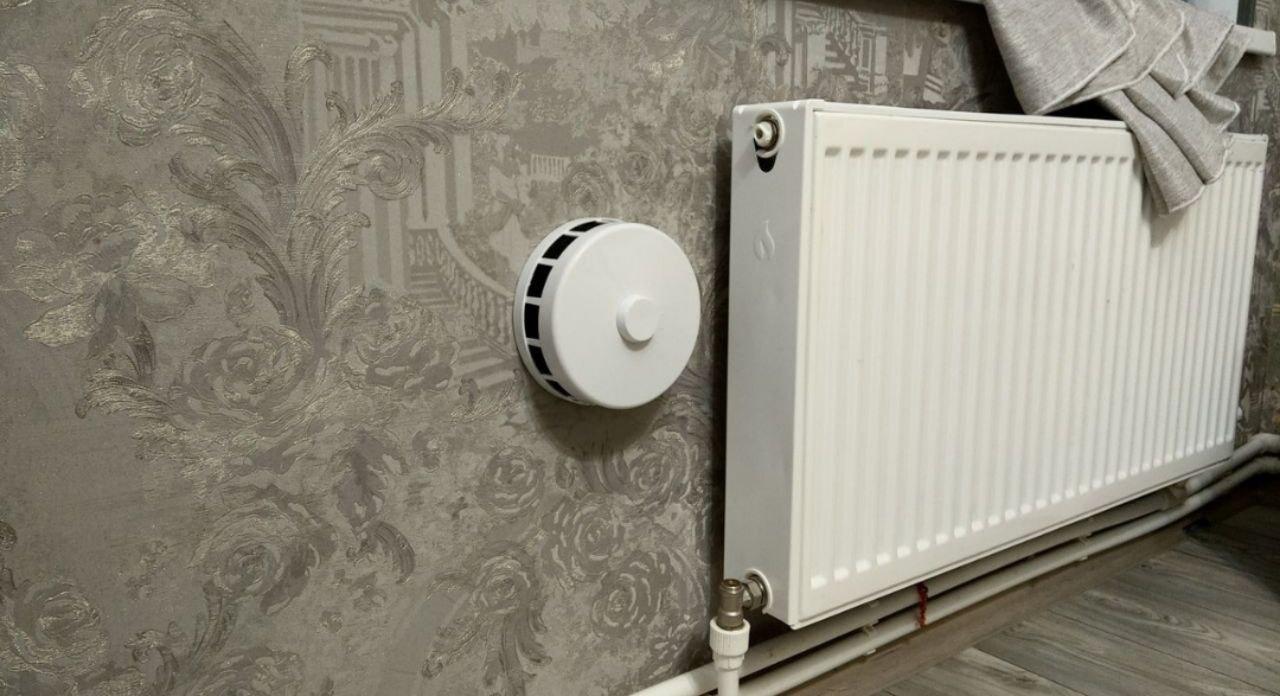
Picture a typical bedroom with a radiator under the window. We usually install the intake valve beside the radiator. If there is enough space between it and the windowsill, the valve can be installed above it. In winter, cold air passes through the wall and mixes with warm air from the working radiator at the outlet. This placement helps reduce the feeling of a cold draught and lets you ventilate the room with the window closed.

The degree of valve opening can be adjusted. A small opening is enough for micro-ventilation. When you need a stronger air intake, the valves can be opened wider.

Ventilation valve installed beside a radiator
Close-up of the ventilation valve cover

How much ventilation costs in several rooms

With standard installation in a wall made of material other than concrete or reinforced concrete, one VentPrime valve costs around 1,500 lei. If several separate rooms have fogged windows or dampness, we provide their own pair of valves for each.

What we installNumber of roomsCost
2 VentPrime valves1 room3,000 lei
4 VentPrime valves2 rooms6,000 lei
6 VentPrime valves3 rooms9,000 lei
1 room recuperator with mini-heating1 room11,000–15,500 lei for the unit
By this calculation, natural ventilation in three rooms costs roughly 9,000 lei. For comparison, one of the verified room recuperators with mini-heating costs from 11,000 lei for the unit.

When we recommend forced ventilation

  • In a bathroom, shower room or toilet. After a shower or bath, steam needs to be removed. A standard extractor fan is often enough for this.
  • In an office, café or clinic. When many people pass through a room, the air needs refreshing faster. In such cases we consider forced ventilation with heat recovery.
  • In a room with no direct access to the outside. If ventilation cannot be routed through an exterior wall or ceiling, the duct can be run through an adjacent room with access to the street. Such a setup may need a system with an adjustable fan.

How VentPrime valves are designed

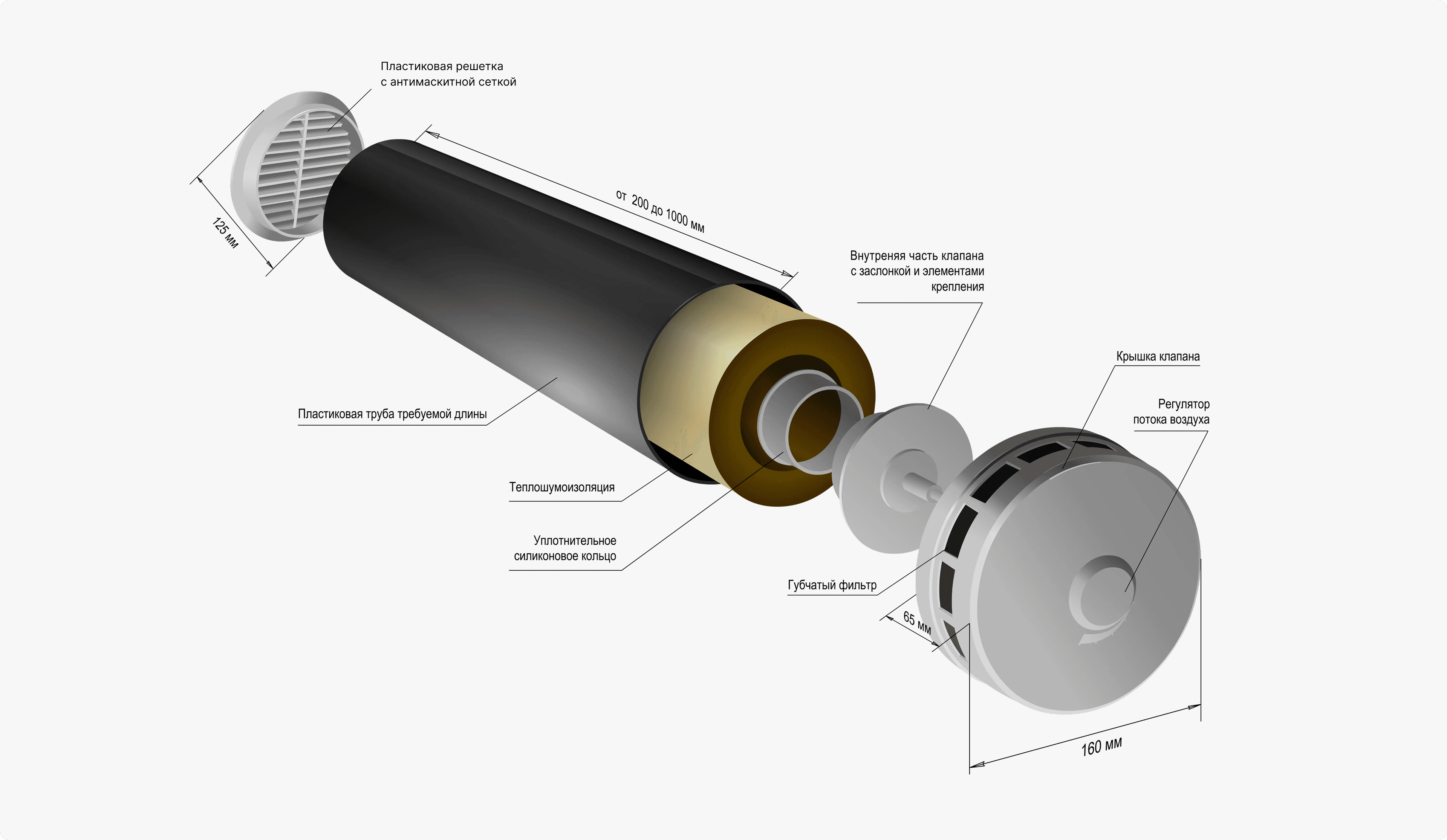
The supply and extract valves are identical in design. Their placement determines which one supplies air and which one extracts it. With standard installation, we drill a Ø110 mm hole, fit a Ø100 mm tube matched to the wall thickness and install an outdoor seal. The tube contains insulation and sound-absorbing material along its entire length. The valve itself has a filter, an anti-condensation membrane and a regulator with five positions.

If your windows fog up, dampness or mould has appeared, or you want to ventilate a room in winter with the windows closed, tell us which rooms are causing concern. VentPrime will help choose the valve placement and calculate installation cost for each room.

Diagram of a wall ventilation valve with pipe and filter

More articles